AT A GLANCE
- Identify materials and stain history before separating cleaning from possible repair needs.
- Confirm whether seats, headlining, the boot and delicate trim are included.
- Check product suitability and consider screens and electrical components separately.
- Discuss drying, collection checks and subsequent care before the appointment.
What does interior detailing actually include?
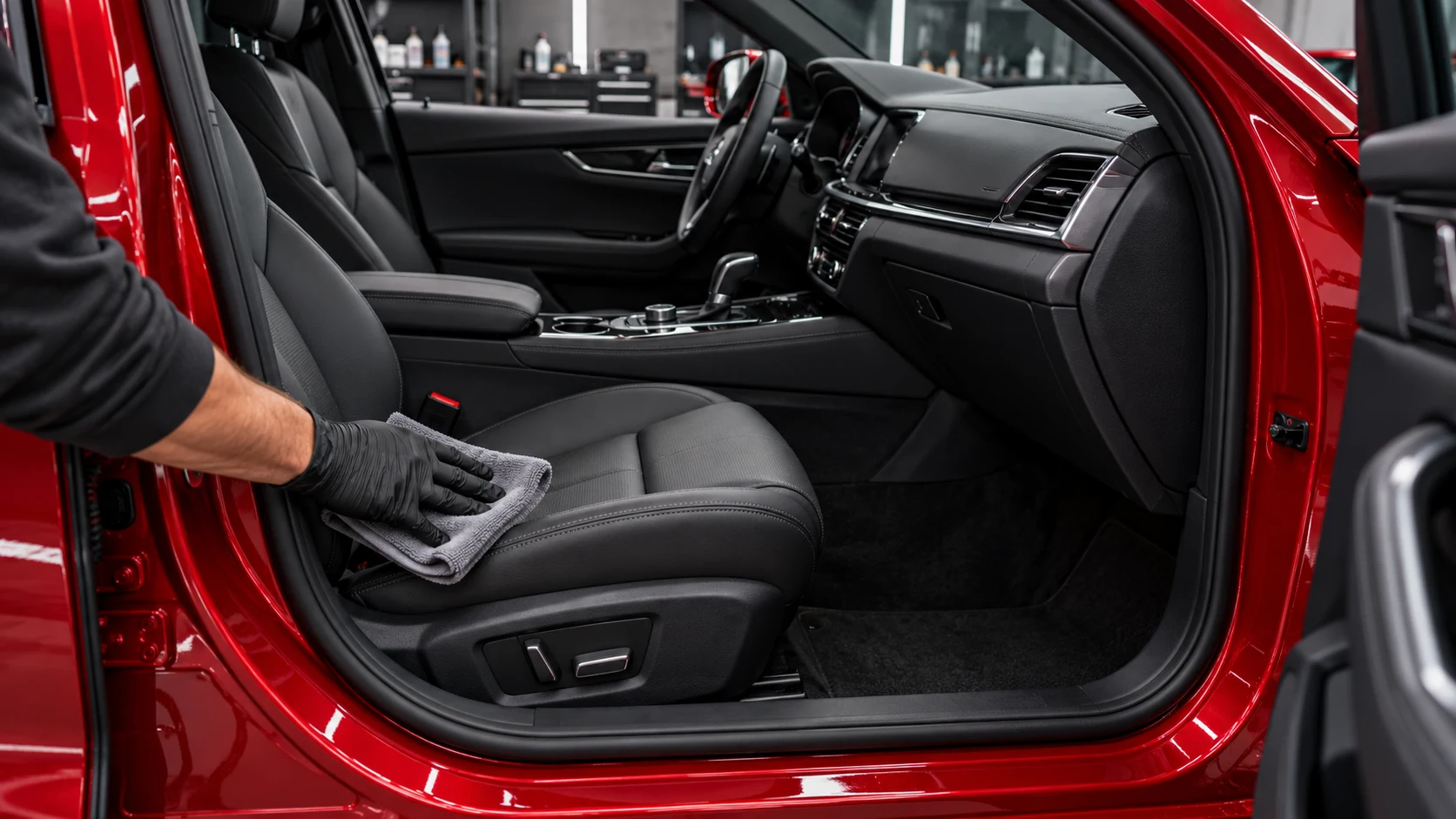
An interior combines many materials and types of use, from seats and carpets to door panels and the boot. The term interior detailing does not automatically establish that all of these areas will be treated within the same scope. Ask for a list before the service. Discuss seat surfaces, gaps between seats, mats, flooring, door panels and the boot individually. This helps you describe the result you want and understand the work that makes up the quotation.
Do not make duration your only initial question. Explain the areas that concern you and how the car is used. Family journeys, carrying a pet, intensive work use and buying a used vehicle can create different priorities. As a hypothetical example, someone concerned about a drink spill on the rear seat may have a different request from an owner focused on the boot. The scope should explain how those priorities are addressed rather than assuming a general package name answers every question.
Why do material type and stain history belong together?
Whether an area is textile, a leather-look material, coated leather or delicate trim matters to method selection. If you do not know the material, consult the vehicle information rather than guessing. Explain when a mark appeared, what was spilled and what has already been tried, to the extent that you know. Not every visible difference is simply dirt. Wear, colour loss and physical damage may need to be considered separately from the cleaning work being discussed.
Imagine, hypothetically, a lighter area on a seat bolster and a drink mark on the sitting surface. Both might initially be described as stains, yet expecting identical changes from cleaning may be inappropriate. Ask the team to explain which areas are being considered for cleaning and which may need a separate repair assessment. A photograph or brief condition note before work provides a shared reference. It makes the collection discussion more specific than relying on an impression of how the seat looked earlier.
Prepare belongings, access and priorities before the appointment
Check personal items in the glovebox, door pockets and boot before the appointment. Removing valuables and items that obstruct access makes the assessment easier. Discuss any accessory that needs to be moved or removed. For equipment such as a child restraint, follow the vehicle and equipment manufacturer's instructions; do not assume the detailing appointment includes its servicing or reinstallation. Establish who is responsible for those tasks beforehand so that an important practical detail is not left to an assumption at collection.
Make a short priority list for the team. You might start with the main stains, then explain areas with frequent dirt and finally identify delicate pieces that concern you. This reduces the chance of remembering an unspoken expectation after the work is complete. Ask how the centre will contact you if an additional need is identified. Agreeing how new work and any effect on collection timing will be discussed makes the appointment easier to plan and keeps the scope understandable as decisions arise.
Take a controlled approach to fabric seats and upholstery
For fabric, product selection needs to account for the material and its response. An inconspicuous-area check following the manufacturer's instructions is an important part of that decision. Using more cleaner or repeatedly wetting one spot does not automatically improve the result. The method, product directions and drying arrangements should be considered together. A process used successfully on another vehicle's upholstery should not become the assumed answer for your seat before the material and its condition have been understood.
A photograph alone may not provide enough information to assess a textile mark. Its extent, previous treatment and the current surface may need to be examined on the vehicle. In a hypothetical case where several household products have already been used, share that history openly. The purpose is to understand what has happened, not to judge earlier decisions. Describe the appearance you hope to achieve, while allowing the team to distinguish ordinary contamination from a longstanding change that may not be addressed by cleaning alone.
Check compatibility for leather and leather-look seats
Do not assume all leather-looking surfaces have identical construction. The vehicle's care information and the cleaner’s intended uses need to be checked together. A multipurpose description does not mean a product is appropriate for every interior material. Methods are product-specific too: do not transfer a brushing or vigorous rubbing instruction from one cleaner to another automatically. Point out areas whose appearance has already changed before work begins, so that the starting condition is understood by both you and the team.
Clarify whether you want general cleaning, assessment of a particular mark or a change to a worn appearance. Combining cleaning with an unstated expectation of repair or recolouring makes the result difficult to review. Ask which changes are being targeted and which areas may retain their current characteristics. Then request guidance on appropriate everyday care. A pleasant fragrance or a shiny appearance alone is not enough to identify whether the proposed product and method are suitable for the material actually installed in your car.
Treat screens, controls and gloss trim as separate areas
Follow the vehicle manufacturer's guidance for multimedia screens, instrument surfaces, buttons and decorative trim. Do not assume an upholstery product is suitable for a screen. The method must also account for the need to keep liquid out of electrical components; direct spraying should not be treated as automatically appropriate. Tell the centre about a specific restriction in your handbook if relevant. A considered detailing plan recognises these differences rather than describing the entire interior as one surface that can be wiped in exactly the same way.
Show the team any marks on a touchscreen or gloss panel and explain your concern. A fingerprint and a scratch are different issues, so do not expect cleaning to remove existing physical damage automatically. Mention a phone mount, added electronics or a delicate accessory that may affect access. Discussing these details is a way of matching the method to the component, rather than adding complexity for its own sake. Any delicate area excluded from the service should also be identified before the appointment rather than discovered at collection.
Clarify headlining, carpets, mats and boot coverage
Seats often attract attention first, but your expectations may extend beyond them. Discuss the headlining, floor carpet, mats and boot individually. If an area has previous treatment or visible deformation, ask for the proposed approach to be assessed on the car. Do not assume the headlining or a confined section will automatically receive the same wet-cleaning method as another surface. The material and its current condition are relevant to planning what work will be carried out and where a limitation needs to be explained.
For recurring dirt in the boot or on the floor, describe how the area is used rather than pointing only at a mark. Hypothetically, someone carrying sports equipment may have different priorities from a driver transporting work materials. Ask which areas would benefit from attention in your subsequent routine. Detailed coverage does not mean every area necessarily requires an additional treatment. It means you know what has been considered, what is included and what remains outside the quotation, allowing the final decision to be made with useful context.
Discuss the source of an odour before choosing a fragrance
If an odour is part of your concern, explain when it becomes noticeable rather than asking only for a stronger scent. Does it appear after the car has remained closed, when a particular area is used, or on every journey? Share any relevant history of spills or moisture that you actually know. Ask how the proposed cleaning scope relates to the concern. A fragranced result does not, by itself, establish that the source of the original complaint has been investigated or addressed.
Not every odour concern can be promised the same outcome from one cleaning process. Ask the team to explain what an inspection suggests and whether another type of check is appropriate. Keep cleaning, technical repair and health claims separate; assessing the service does not require an unsupported hygiene promise. The useful information is what was inspected, which areas were treated and what is recommended if the concern continues. Request an understandable follow-up plan so that a remaining issue does not leave you guessing what to do next.
Plan drying and the return to normal vehicle use
When booking, explain when you next need the vehicle. Agree collection around the proposed work and drying condition, rather than relying on a single duration that is assumed to fit every interior. Tell the centre about plans such as a long journey, carrying passengers or reinstalling a child restraint. Connecting the appointment to these practical needs early gives you time to make arrangements. It is easier than discovering a conflict at handover and feeling pressured to decide quickly about something that should have been discussed beforehand.
At collection, ask about any remaining moisture, relevant ventilation guidance and conditions for subsequent use. Request clarification if the explanation is unclear. Check an area together if you think it still feels damp rather than judging readiness by appearance alone. An internet comment about another vehicle's drying time is not a definitive measure for your appointment. Scope, method and conditions can differ. Guidance for the work performed on your own car provides a more direct reference for planning the next journey responsibly.
Review the work and create a manageable care routine
Go through the areas discussed at the start with the team when collecting the car. Use the same list for the main marks, delicate trim and agreed exclusions. If an area retains a mark, request an explanation and ask about any further options where appropriate. Do not judge the whole service only by the initial fragrance. Appearance, completion of the agreed scope, drying information and routine-care instructions together provide a more balanced basis for understanding the outcome and deciding whether a follow-up question remains.
Keep subsequent care practical. Learn which products are suitable for each relevant surface, whom to ask about a small spill and when an inspection may be useful. When reading the CarWAX interior detailing and interior protection pages, establish their individual scopes if both are being considered. Regular care should be about recognising materials and noticing needs at an appropriate time, rather than continually moving to a stronger process. A clear routine and realistic expectations make everyday upkeep easier to manage between professional appointments.
- Review the same areas identified in the original priority list.
- Request an explanation of persistent marks and agreed exclusions.
- Clarify drying and subsequent use instructions.
- Learn the appropriate products and methods for routine upkeep.